





Compact 12V Inverters for Cars: Best Options for Small Spaces
- Why compact 12V inverters matter in modern vehicles
- Space-constrained cabins and cargo areas
- Power needs for today’s devices
- Safety, compliance and electromagnetic considerations
- Choosing the right 12 volt inverter for your car: practical criteria
- Continuous vs. peak (surge) power
- Waveform: modified sine vs pure sine
- Form factor, mounting and thermal management
- Top compact inverter options and use cases
- Low-power (≤200 W) solutions
- Medium (200–500 W) options
- Portable power stations as an alternative
- Installation, safety and troubleshooting
- Wiring, fusing and battery impact
- Protecting vehicle electronics
- Common faults and fixes
- Manufacturer spotlight: Guangzhou Congsin Electronic Technology Co., Ltd.
- Congsin strengths and differentiation
- How to evaluate vendor claims
- Final recommendations and buying checklist
- Frequently Asked Questions (FAQ)
- 1. Is a 12 volt inverter for car safe to leave connected to the battery overnight?
- 2. Can a compact inverter run a laptop and a small fridge simultaneously?
- 3. Do I need a pure sine wave inverter for my laptop?
- 4. What wire gauge and fuse size should I use for a 300 W inverter?
- 5. Are portable power stations better than 12V inverters for car use?
- 6. How do I avoid electromagnetic interference (EMI) from an inverter?
As someone who has advised fleets and recreational vehicle owners for years, I know the constraints of limited cabin and storage space. This article focuses on compact 12 volt inverter for car use—the small, efficient DC→AC converters you can tuck into gloveboxes, under seats or in tight cargo areas. I will walk you through selection criteria, installation best practices, use-case recommendations, and trustworthy manufacturing sources so you can pick the right inverter without compromising safety or device performance.
Why compact 12V inverters matter in modern vehicles
Space-constrained cabins and cargo areas
Cars, small vans and many SUVs don't have the generous installation real estate of RVs or trucks. A compact 12 volt inverter for car must therefore balance physical footprint, mounting options and heat dissipation. I recommend measuring the available space (including clearance for ventilation) and planning cable runs before buying. Typical compact models range from roughly 120 mm to 220 mm in length for 150–300 W continuous units.
Power needs for today’s devices
Most laptop chargers, camera battery chargers, small appliances and power tools used intermittently in vehicles fall into the 50–400 W range. Understanding continuous versus peak (surge) power is critical: many small devices (e.g., refrigerators, pumps, or power tools) draw a substantial surge at startup even if their running power is modest. For this reason, I often recommend choosing an inverter whose peak capability covers the device's startup surge.
Safety, compliance and electromagnetic considerations
When you install a 12 volt inverter for car use, you're introducing an AC source into a DC vehicle electrical system. That raises safety questions (fusing, overcurrent protection, thermal management) and EMC concerns (interference with radios, CAN bus or vehicle electronics). Look for inverters with certification marks and compliance statements; certifications like CE, RoHS and recognized testing marks (ETL, FCC) signal a manufacturer takes safety and emissions seriously. For an overview of inverter principles and design considerations see the Wikipedia article on inverters: Inverter (electrical).
Choosing the right 12 volt inverter for your car: practical criteria
Continuous vs. peak (surge) power
Continuous (rated) power is what an inverter can sustain indefinitely under specified ambient conditions. Peak or surge power is a short-duration capability used to start inductive loads like motors or compressors. I always advise sizing for continuous power slightly above the device's running wattage and ensuring the inverter’s surge rating comfortably covers startup draws.
Waveform: modified sine vs pure sine
A common decision with a 12 volt inverter for car is waveform type. Modified (or stepped) sine wave inverters are cheaper and fine for resistive loads (charging phones, running simple lamps). Pure sine wave inverters produce a cleaner AC waveform compatible with sensitive electronics, variable-speed motors, medical devices and many laptop power supplies. If you plan to run modern electronics without odd behavior, a pure sine wave inverter is the safer choice; technical background on waveform implications is discussed in engineering literature and summarized here: Inverter waveforms.
Form factor, mounting and thermal management
Compact inverters must still dissipate heat. Even efficient units (85–95% conversion efficiency) create waste heat at higher loads. I check for thermal foldback (automatic derating at elevated temperatures), clear mounting points, and ventilation needs. Some compact models include fan cooling, while others rely on passive convection; fans can increase noise but allow higher continuous ratings in limited spaces.
Top compact inverter options and use cases
Low-power (≤200 W) solutions
These are ideal for charging laptops, running small CPAP machines (verify device compatibility), phone chargers, small cameras and LED lighting. They typically draw modest current from a 12 V vehicle battery, making them suitable for short trips and occasional use. For overnight use from the vehicle battery, always compute amp-hours to avoid draining the battery.
Medium (200–500 W) options
Medium-power inverters cover more demanding devices: larger laptops, small coffee makers (briefly), camera chargers, and some cordless tool chargers. They require heavier gauge wiring (often 8–10 AWG for short runs) and a properly rated fuse near the battery. Consider these when you need more flexibility but still have limited space.
Portable power stations as an alternative
Portable power stations combine a battery pack and inverter into a single, transportable unit. They eliminate wiring to the vehicle battery and can be a neat compact alternative when you want a plug-and-play solution. These are especially useful if you need inverter power away from the vehicle or want integrated battery management and multiple output types (AC, USB, 12 V DC).
| Class | Typical continuous power | Typical peak/surge | Typical size (L × W × H) | Use cases | Estimated price range (USD) |
|---|---|---|---|---|---|
| Low-power | 100–200 W | 200–400 W | 120–170 × 60–80 × 30–50 mm | Phone/laptop charging, small lights | $30–$80 |
| Medium | 200–500 W | 400–1000 W | 170–220 × 80–90 × 40–60 mm | Laptops, camera chargers, small appliances | $80–$250 |
| Portable power station | 300–1500 W (depends on model) | 500–3000 W | Varies; integrated battery pack | Longer runtime, off-vehicle use | $150–$1500+ |
Data are typical market ranges based on manufacturer catalogs and product specifications; actual sizes and prices vary. For general inverter technology background see Inverter (electrical).
Installation, safety and troubleshooting
Wiring, fusing and battery impact
Install the positive battery fuse within 18 inches (45 cm) of the battery terminal to protect cabling in case of a short. Use the correct wire gauge for the current: for example, a 300 W inverter at 12 V draws around 25–30 A continuous (plus losses), so 10 AWG or thicker is recommended for short runs; 8 AWG for longer runs or higher continuous loads. If you aren't comfortable with vehicle electrical work, consult a qualified technician to avoid damage to the vehicle's wiring harness.
Protecting vehicle electronics
Modern cars have sensitive ECUs and CAN bus communications. A poorly designed inverter can generate electrical noise and spikes. I advise choosing units with good filtering, low idle-noise specifications, and surge suppression. Turning off the inverter when starting the vehicle or doing critical operations reduces risk. If interference appears, move the inverter farther from the vehicle's radio and ECU cabling, and ensure proper grounding.
Common faults and fixes
- Inverter trips immediately: check the near-battery fuse and connection polarity; ensure the battery has sufficient voltage (below ~10.5 V many inverters will undervolt-protect).
- Overheating or thermal shutdown: improve ventilation, reduce continuous load, or choose a model with active cooling.
- Interference with radio: relocate unit, add ferrite cores to power leads, or use a higher-quality pure sine inverter with better EMI filtering.
Manufacturer spotlight: Guangzhou Congsin Electronic Technology Co., Ltd.
In my work advising procurement teams, I've seen suppliers vary widely in quality and supply chain reliability. Guangzhou Congsin Electronic Technology Co., Ltd., founded in early 1998, is a professional power inverter manufacturer with over 27 years of focused experience. We design, R&D and manufacture a wide range of power solutions—with a core emphasis on DC→AC power inverters, portable power stations, and solar charge controllers. Our catalog includes 100+ models tailored for vehicles, solar systems, RVs and trucks, off-grid homes, outdoor offices, patrol and field construction work.
We operate fully automated production lines, advanced instrumentation and multifunctional testing equipment to ensure product reliability, efficiency and intelligent functionality. Environmental and safety compliance are built in: our quality system is ISO9001 certified (ISO 9001) and many products hold international approvals such as CE, EMC, LVD, ETL, FCC, RoHS and E-MARK. Several independently developed patents further demonstrate our commitment to innovation.
Congsin’s products serve global markets across Europe, the Americas, the Middle East, Africa and Southeast Asia; many models are supplied to domestic and international OEM channels. Our support includes OEM/ODM, private labeling, distribution and bespoke customization to meet partner specifications. Our mission is to deliver reliable, efficient and affordable energy solutions that enable energy independence.
Congsin strengths and differentiation
What sets manufacturers like Congsin apart is a combination of long-term manufacturing experience, robust QA systems, and a broad product portfolio that includes solar charge controllers, modified sine wave inverters, pure sine wave inverters, and portable power stations. For buyers needing compact 12 volt inverter for car installations, this breadth allows tailored solutions—compact footprints, configurable mounting, and firmware or protection features specific to vehicle use.
How to evaluate vendor claims
When I evaluate suppliers, I verify test reports, check certification bodies (for example see ETL guidance at Intertek ETL), and request production line audits if possible. Certifications and factory automation correlate with consistent product quality and lower defect rates.
Final recommendations and buying checklist
- Define your load profile: list each device, its running wattage and startup surge.
- Choose pure sine wave for sensitive electronics; choose modified sine only when budget and load types permit.
- Size the inverter for continuous load plus headroom for efficiency loss and future needs.
- Plan wiring: fuse at battery, correct gauge wire, and secure mounting with ventilation.
- Prefer manufacturers with ISO9001 and recognized testing marks; request test reports when in doubt.
If you want help evaluating specific models for your vehicle or a custom OEM solution, contact me or reach out to Guangzhou Congsin for model recommendations tailored to compact installations.
Frequently Asked Questions (FAQ)
1. Is a 12 volt inverter for car safe to leave connected to the battery overnight?
It depends. Leaving a large inverter and load connected can drain the battery and may leave you unable to start the vehicle. If you must run devices overnight, use a deep-cycle auxiliary battery or a portable power station designed for long runtimes. If using the vehicle battery, monitor battery voltage and consider an auto-cutoff or low-voltage alarm.
2. Can a compact inverter run a laptop and a small fridge simultaneously?
Possibly—if the combined continuous power is within the inverter’s rating and the inverter’s surge capacity handles the fridge compressor startup. Verify the fridge’s startup current and the inverter’s surge rating. For fridges, a higher-capacity inverter or a dedicated fridge inverter is often required.
3. Do I need a pure sine wave inverter for my laptop?
Many laptops tolerate modified sine wave inverters, but some chargers may run hotter, charge slower, or exhibit instability. For reliability and to avoid potential damage, I recommend a pure sine wave inverter for laptops and other sensitive electronics.
4. What wire gauge and fuse size should I use for a 300 W inverter?
A 300 W inverter at 12 V draws about 25–30 A continuous plus overhead. For short runs (<3 m), 10 AWG copper is common; 8 AWG is safer for longer runs or higher ambient temperatures. Fuse size should protect the cable, typically rated slightly above the maximum continuous draw—consult the inverter manual and local electrical safety standards.
5. Are portable power stations better than 12V inverters for car use?
They offer advantages: no vehicle wiring, integrated battery management, and portability. However, they add bulk and require charging (via AC, solar or car socket). For short-term, low-power needs inside a car, a compact 12 volt inverter for car installations may be lighter and cheaper; for extended off-vehicle use or when you need more runtime and outlets, a portable power station can be a better fit.
6. How do I avoid electromagnetic interference (EMI) from an inverter?
Choose an inverter with good EMI filtering and certifications. Place it away from radio antennas and ECU wiring, use ferrite cores on cables, and ensure solid grounding. If interference persists, upgrade to a higher-quality pure sine inverter with improved filtering.
If you’d like a personalized recommendation or a quote for compact 12 volt inverter for car solutions, contact me or request product information from Guangzhou Congsin. We can help size the inverter, recommend mounting options, and supply certification documentation.
Contact / Product Inquiry: For model catalogs, OEM/ODM options, and technical consultation, please reach out to Guangzhou Congsin Electronic Technology Co., Ltd. or email our sales team for tailored solutions.
Cost vs Performance: Is a 1000W Car Inverter Worth It?
Bidirectional Inverter Buyer's Guide: Choose the Right Model
Top 10 2000W Pure Sine Wave Inverters for RVs and Campers
High Frequency Inverter Safety Standards and Compliance Guide
Modified Sine Wave Inverters
What devices can this inverter support?
It can power laptops, phones, cameras, and other small appliances.
What is the benefit of the UPS function? A2:
It automatically switches to battery power when AC fails.
Which regional plugs are supported by the universal socket?
The universal socket is compatible with most national plug specifications, such as GB, US, EU, etc. (some require adapters), and can meet the use of devices in different regions.
Which plug types are supported by the universal socket?
The universal socket is compatible with most national plug specifications, such as GB, US, EU, etc., and can meet the use of devices in different regions (some require adapters).
Distributor
What kind of support can I expect from Feifan after becoming a distributor?
You will receive ongoing sales support, product training, technical assistance, and marketing resources to ensure your success.
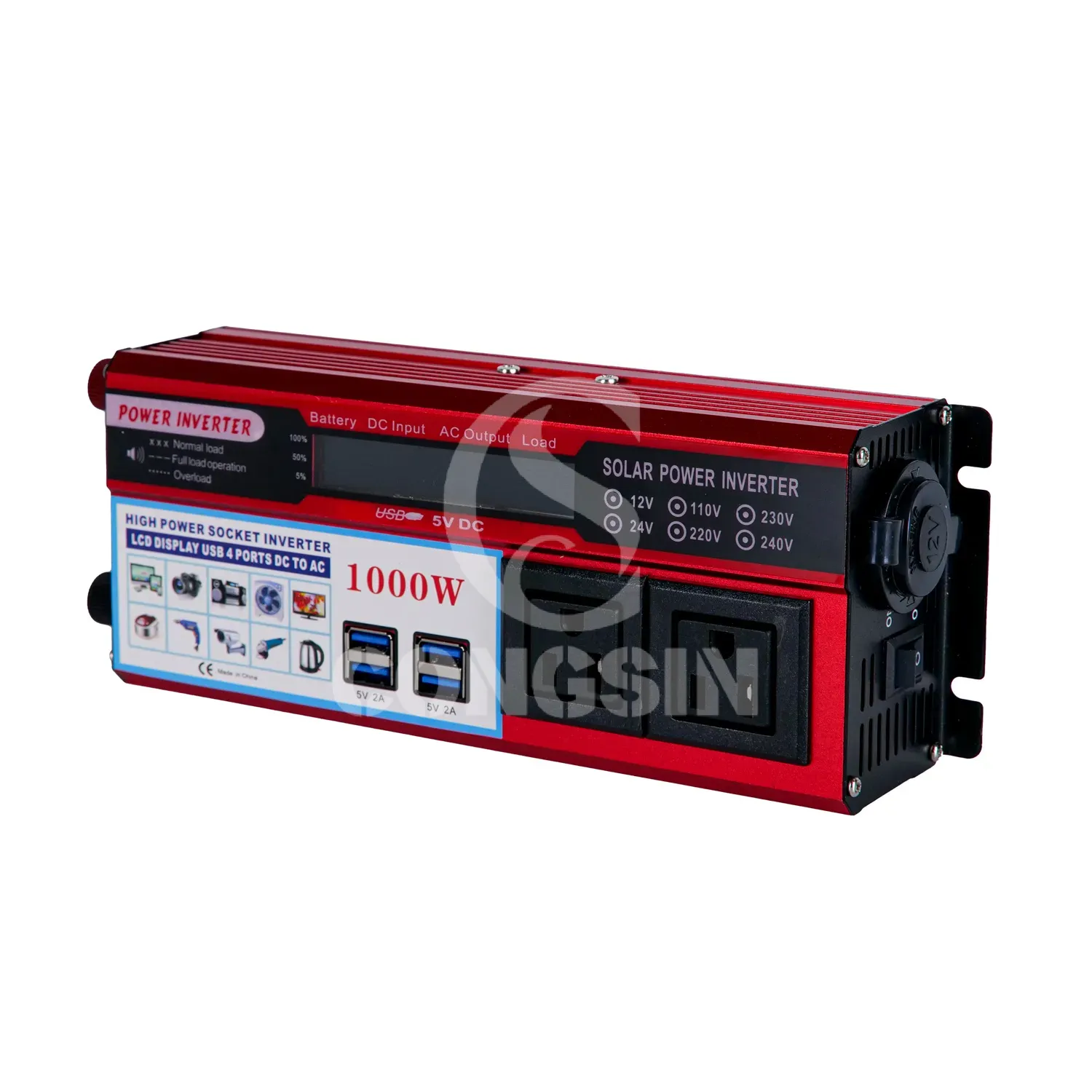
Congsin 1000W modified sine wave inverter with American Sockets and Lcd display portable 12V car RV
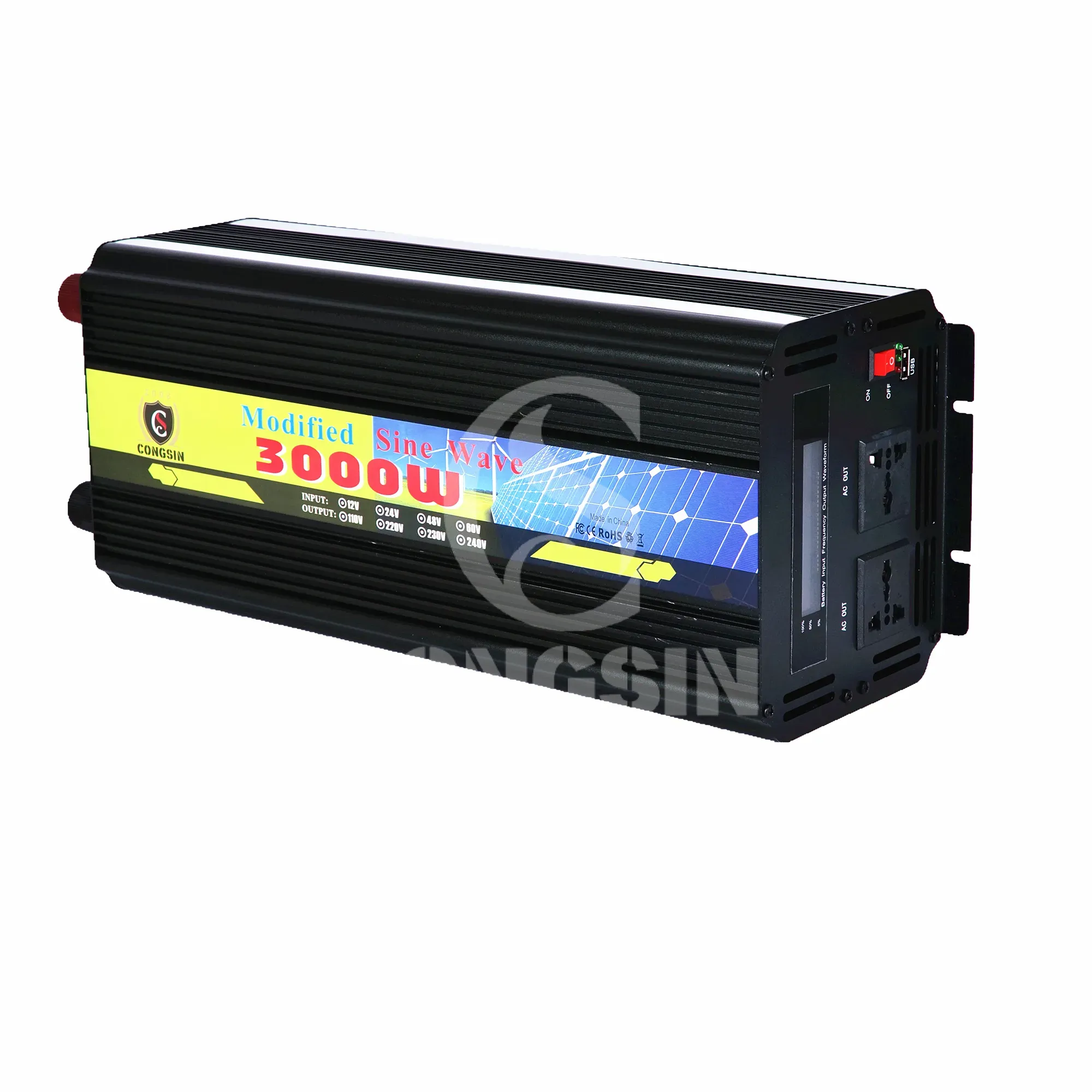
Congsin Full Power 3000W Modified Sine Wave Inverter Peak Power 6000W with LCD Display RV Solar
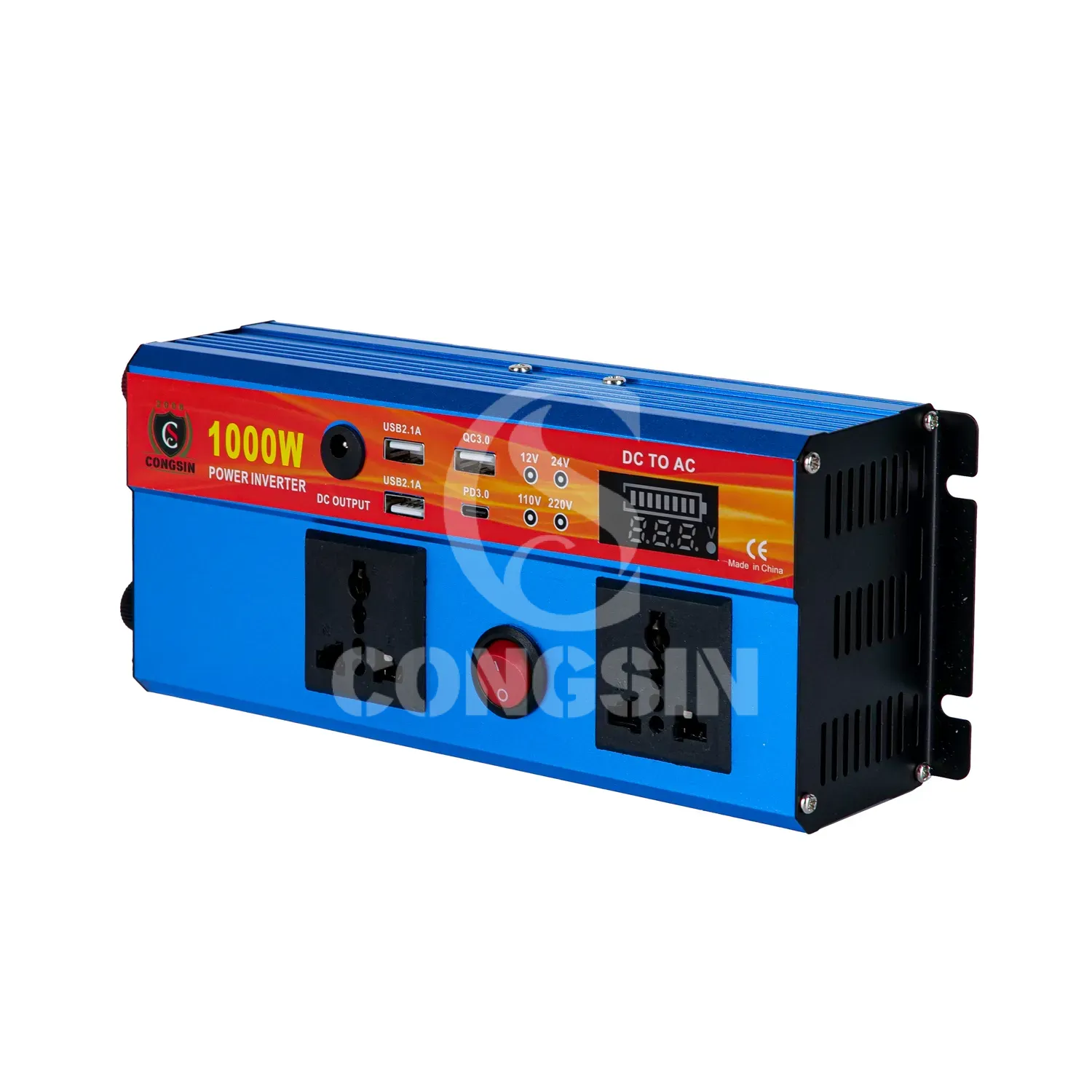
Congsin 1000W modified sine wave inverter with LED display and Type C port car RV power inverter
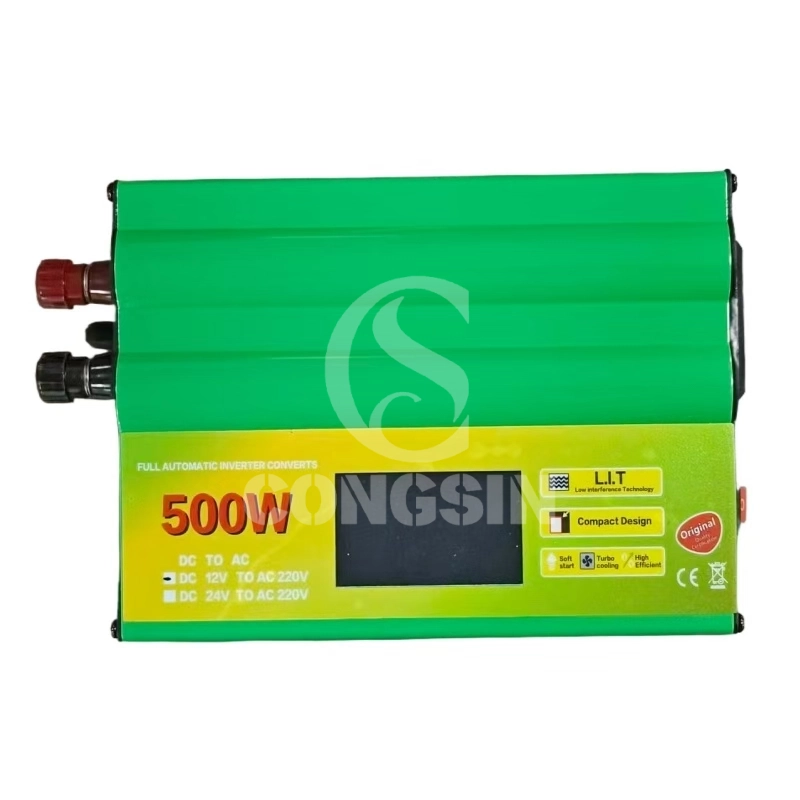
Congsin Modified Sine Wave Inverter 500W 1000W 1500W 12V LED Display Portable for RV Car Solar

CONGSIN is a trusted OEM factory for power inverters, solar charge controllers, and DC converters. Reliable solutions for global B2B buyers.
 High Quality
 7/24 Service
 Guaranteed Warranty
© 2025 Congsin. All Rights Reserved.